Hedge Trimming in Rotherhithe
We provide hedge trimming in Rotherhithe for domestic gardens, shared outdoor spaces and managed grounds that need a neat, controlled finish. The work is centred on shaping, reducing and maintaining hedges so they grow in a disciplined way rather than becoming top-heavy, sparse at the base or difficult to manage. That can include routine seasonal cuts, careful height reduction, formal shaping and the removal of awkward overgrowth where a hedge has begun to spread beyond its intended line.
Our service is suited to hedges that need regular maintenance as well as those that have been left longer than planned. Different species respond in different ways, so the approach needs to suit the plant, the season and the desired result. A tidy hedge is not just about appearance: it can improve access, help define boundaries and make the rest of the garden easier to look after. Where a hedge is part of a larger planting scheme, we aim for a finish that sits naturally with the rest of the space.
For a straightforward quotation, tell us what needs trimming and how the hedge is used in the garden. If you already know the type, approximate height or the level of reduction you want, that is helpful, but it is not essential. See our main services if you want a broader view of what we cover before requesting a quote.
Hedge shaping and routine maintenance
Regular hedge trimming keeps growth within bounds and supports a cleaner outline through the year. Some hedges need only light, repeated cuts to stay level and dense; others benefit from more involved reshaping after a period of unchecked growth. We can work to a crisp formal line or a softer natural profile, depending on the style of the planting and the look you want to keep. The main aim is always the same: to leave the hedge balanced, healthy-looking and manageable.
Maintenance work is usually best approached with consistency. A hedge that is trimmed at suitable intervals generally holds its form better than one that is cut back heavily after long gaps. We pay attention to the top, sides and base so the hedge does not shade itself too much or flare outward where access is easiest. Garden maintenance can be a useful option where hedge care needs to sit alongside other regular outdoor work.
When planning trimming, small details make a difference. The angle of the cut, the amount removed and the line followed along the boundary all affect the final result. Some hedges are best clipped lightly to preserve thickness, while others need a measured reduction to restore shape and visibility. The right finish is usually one that respects the plant’s growth habit rather than forcing it into an unsuitable form.
Reducing overgrown hedges safely

Overgrown hedges often need more than a simple tidy-up. Where growth has become uneven or obstructive, reduction work can restore usable height and width without stripping the hedge back too hard in one go. The exact method depends on species, condition and how much needs to come off. In some cases a staged reduction is better than an aggressive cut, especially if the hedge is dense, mature or has not been maintained for some time.
We treat reduction as careful pruning rather than blunt removal. That matters because a hedge that is cut back indiscriminately may lose shape, become patchy or take time to recover. A considered approach helps preserve screening while easing pressure on the structure of the hedge. Where the hedge borders a path, drive or shared edge, reducing encroachment can also improve everyday access and make the boundary easier to use.
Good hedge reduction balances control and plant health. It should reduce the problem you can see now while leaving the hedge in a condition that can be maintained afterwards. In practical terms, that means checking the hedge line, stepping back to keep the profile even and avoiding unnecessary cuts into old growth where the plant may not respond well. If the hedge has both height and width issues, both should be addressed in the same plan so the finish looks coherent rather than patched together.
Hedge types, seasons and finishing options
Different hedge species call for different trimming styles. Evergreen hedges usually need their own rhythm of maintenance, while deciduous hedges may be cut to encourage density and a strong seasonal outline. Flowering hedges can require more care if you want to preserve buds or fruit, and some native hedges are best managed with an eye to wildlife value as well as shape. We work in a way that aims to suit the plant rather than applying the same cut everywhere.
Season matters too. Timing affects how a hedge recovers, how visible the structure is and how much regrowth can be expected after cutting. Light maintenance may be suitable when the hedge is actively growing, while more substantial reduction is often planned when the plant is better able to cope. In every case, the finish should be neat but not overworked, with clear lines and a stable shape that can be looked after more easily next time. Hedge trimming is the core service, but the way it is delivered varies with the hedge itself.
Some customers prefer a precise, clipped edge; others want a softer boundary that still looks ordered. We can adapt the result to suit front gardens, back gardens and more open planted edges. Where hedges form part of a wider layout, the final profile should work with paths, lawns and planting beds rather than dominating them. A clean hedge line can make the whole garden feel more settled.
Preparing for a quotation
A useful quotation starts with a clear picture of the hedge and the access around it. If you can describe the approximate height, length, thickness and condition of the hedge, that helps us understand the scale of the work. It is also useful to mention whether you want a light trim, a reduction or a full reshape. Photos can be helpful, especially where the hedge is tall, mixed or difficult to describe accurately in words.
Access and disposal considerations may also affect the quotation. For example, a hedge beside a narrow side return, raised area or shared boundary may take a different amount of time to work through than one with open access all round. If cuttings need collecting and removing, that is part of the overall scope to discuss. Pricing and quotes may help you understand how enquiries are usually approached before you get in touch.
To keep the process simple, tell us what result you want, where the hedge sits and whether any parts are difficult to reach. That allows the work to be assessed sensibly and avoids guessing. The clearer the brief, the easier it is to shape a practical quotation. You do not need to write a long description; a few accurate details are usually enough to begin.
Hedge trimming with wider garden work

Hedge work often fits alongside other outdoor maintenance rather than standing alone. If borders, lawns and shrubs are all being kept in order, a hedge can be trimmed at the same time so the garden has a consistent finish. That may be useful where a hedge is the backdrop to planting beds, or where an untidy line of growth is affecting the overall sense of order in the space. Coordinating tasks can also make it easier to keep the whole garden looking intentional.
Where extra garden work is needed, it is sensible to match the service to the site rather than overcomplicating the visit. Garden clearance may be relevant where a hedge sits beside accumulated cuttings, self-seeded growth or other material that needs removing before the boundary can be tidied properly. In a different setting, landscape gardening may suit projects that go beyond maintenance and involve reshaping parts of the outdoor space.
Some customers only need one hedge brought back under control; others want several edges, screens or boundary plants attended to in the same appointment. Either approach can be sensible, provided the work is planned clearly. A good finish is one that leaves the hedge looking deliberate, well-proportioned and easy to maintain afterwards, rather than simply cut short for the sake of speed.
How we approach the work
Hedge trimming is best done with care for line, density and plant health. We begin by understanding the current shape and the result the hedge needs to achieve. From there, the work may involve leveling the top, straightening the sides, easing bulges or reducing dominant sections so the hedge reads as one continuous feature. Where the hedge runs along a boundary, the line needs to stay consistent so the finish does not drift as the work continues.
Garden maintenance can overlap with hedge care when the hedge needs regular attention through the year. In many gardens, the best outcome comes from trimming at sensible intervals rather than waiting for major overgrowth. That approach keeps the hedge easier to manage, helps preserve the intended form and reduces the chance of the hedge becoming difficult to bring back into shape.
Useful details can include whether the hedge has obstacles near it, whether both sides are accessible and whether you want the cuttings taken away. It also helps to say if the hedge is mainly decorative, screening, boundary-defining or mixed use. Those practical points make it easier to match the work to the garden. We then focus on delivering a finish that is neat, controlled and appropriate to the hedge’s role.
About Rotherhithe
Rotherhithe lies on the south bank of the River Thames in the London Borough of Southwark and has long been shaped by its riverside setting. Historically linked with docks, shipbuilding and maritime trade, the area still carries traces of that industrial past in its streets, wharves and waterside land. Its name is closely associated with the former working riverfront, while later redevelopment has brought a mixture of housing, paths and public spaces into an area that remains recognisably tied to the Thames. The peninsula form of Rotherhithe gives it a distinct geography, with water shaping movement, land use and views across the river. The area also includes parts of former docklands, and several streets and open spaces reflect the changing relationship between the neighbourhood and the river economy. Among its notable features are the Thames Path, the green open space at Russia Dock Woodland and the historic atmosphere around the old dock basins. The Brunel Museum commemorates the Thames Tunnel, an important feat of engineering associated with the area, while St Mary’s Church and the surrounding churchyard add to the sense of long continuity. Rotherhithe’s built environment combines older terraces, converted warehouses and newer developments, producing a varied urban landscape rather than a uniform district. The area’s riverside character, layered history and mix of open space and housing make it a distinctive part of south-east London.
Hedge finishing for different garden settings
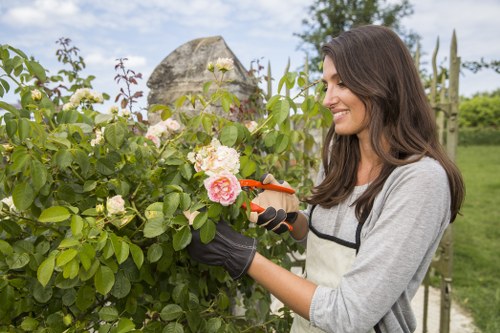
Not every hedge needs the same style of finish. A front boundary hedge often benefits from a sharper, more presentable line, while a rear garden hedge may be shaped for privacy, shelter or a softer visual effect. Side returns and shared edges can call for a more practical approach where the aim is simply to restore usable width and keep growth from spilling into walkways. The service can be adapted to each setting without treating every hedge as if it were the same.
Tree lopping and removal is not a substitute for hedge care, but it can be relevant where larger woody growth is affecting a hedge line or making access difficult. For clients with broader outdoor plans, landscaping may be the better route when the hedge is only one part of a wider change to the garden’s layout or appearance. The key is to choose the right level of work for the actual condition of the site.
If you would like to move ahead, send a brief description of the hedge and the result you want. A clear note about the size, access and type of finish gives us the right starting point for a quotation. Request a quote here when you are ready to get the process started.
Practical hedge care and related choices
There are a few practical decisions that can affect how hedge trimming is planned. One is whether the hedge should be kept to a fixed size or gradually reduced to a more manageable level. Another is whether the cut should emphasise privacy, boundary definition or a decorative outline. The answer depends on the hedge’s purpose, the species involved and how much growth has accumulated since the last trim. These choices shape the work far more than a generic one-size-fits-all approach.
In some gardens, it is also worth considering how the hedge relates to other features such as lawns, paving and planting beds. A hedge that leans too far over a path may need a different treatment from one that simply needs a tidy face. Likewise, hedges that shade smaller plants may need a more careful profile to avoid unwanted pressure on the rest of the border. Lawn mowing can complement hedge work where the edge of the garden is meant to look clean and connected.
If you are comparing options, focus on the finish you need rather than the label alone. Trimming, shaping, reduction and ongoing maintenance each suit different conditions. A thoughtful approach usually produces a hedge that looks natural, stays within bounds and is easier to keep in order later. That is the value of doing the work to the hedge, not just to a timetable.
Choosing the right service for the hedge
Where a hedge is part of a larger boundary, the aim is often to keep it steady rather than dramatically change it. Where it has become uneven or intrusive, a more involved trim or reduction may be needed to restore balance. We can work with straightforward domestic hedges as well as more demanding, established growth that needs patient attention. The result should be a hedge that is visibly improved without being stripped of its character.
For some properties, hedge trimming sits alongside seasonal tidy-ups or more intensive garden work. In those cases, it may be useful to learn more about us if you want a little more context before requesting a visit, though the main priority remains the hedge itself. Different jobs can be planned in a way that keeps the work coherent and avoids unnecessary overlap. That helps ensure the finished garden still feels well ordered rather than pieced together from separate tasks.
When you are ready, the next step is simple: send the hedge details and ask for a quotation. We will use the information provided to understand the scope and shape a practical response. The final result should be easy to maintain, visually tidy and suitable for the way the hedge is actually used in the garden.