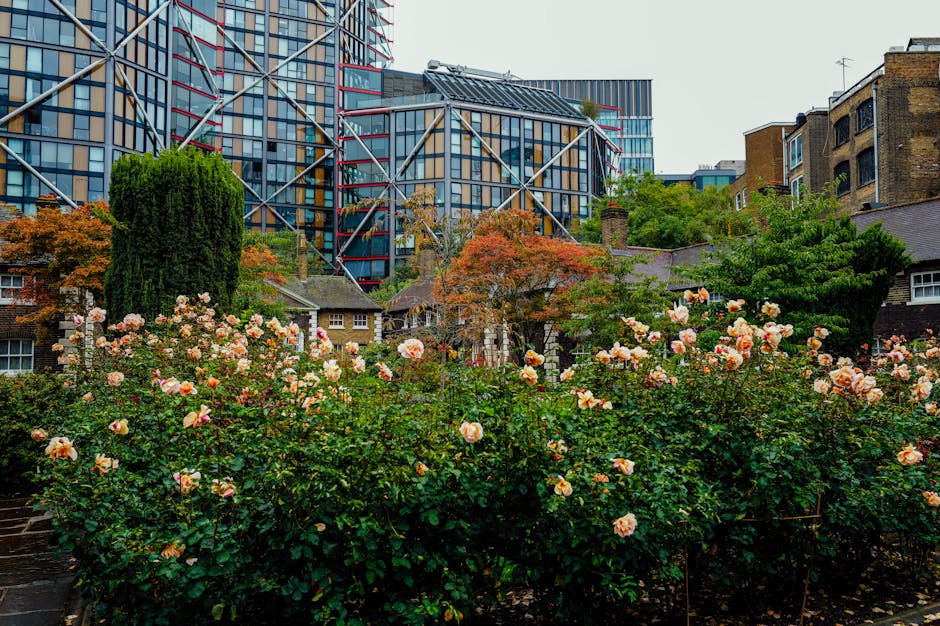
Surrey Quays station garden insider tips from local gardeners
If you've ever walked around Surrey Quays station and noticed how much character a small patch of green can add to a busy urban setting, you're not imagining it. Gardens near transport hubs have to work harder. They need to handle shade, foot traffic, wind tunnels between buildings, dry spells, and the kind of everyday wear that comes from real life. That is exactly why Surrey Quays station garden insider tips from local gardeners are so useful: they're grounded in what actually thrives in this part of London, not just in glossy garden centre labels.
In this guide, you'll get practical advice from a local-garden perspective: what works near Surrey Quays station, what usually fails, how to plan sensibly, and how to make small spaces feel calm, tidy, and green without creating extra headaches. We'll also cover common mistakes, useful tools, UK best-practice considerations, and a realistic step-by-step approach you can use whether you're improving a private garden, a communal space, or a container planting scheme outside a property.
Truth be told, urban gardening is rarely about perfection. It's about choosing the right plant, in the right place, with the right expectations. Get that part right, and the rest becomes much easier.
Table of Contents
- Why Surrey Quays station garden insider tips from local gardeners Matters
- How Surrey Quays station garden insider tips from local gardeners Works
- Key Benefits and Practical Advantages
- Who This Is For and When It Makes Sense
- Step-by-Step Guidance
- Expert Tips for Better Results
- Common Mistakes to Avoid
- Tools, Resources and Recommendations
- Law, Compliance, Standards, or Best Practice
- Options, Methods, or Comparison Table
- Case Study or Real-World Example
- Practical Checklist
- Conclusion
- Frequently Asked Questions
Why Surrey Quays station garden insider tips from local gardeners Matters
Gardening near Surrey Quays is not the same as gardening in a quiet suburban back garden. The area has a distinctly urban rhythm: footfall from commuters, reflected heat from paving, pockets of shade from tall buildings, and occasional gusts that seem to arrive from nowhere. Local gardeners know that these conditions change what "good gardening" actually means.
That is the real value of local insight. A plant that looks fine in a sheltered courtyard may sulk beside a station frontage. A decorative scheme that is lovely in June can look tired by late August if it hasn't been designed for drought tolerance. The best Surrey Quays station garden advice is therefore less about trends and more about resilience, maintenance, and timing.
There's also a practical community angle. Well-kept planting can soften hard edges, improve how an entrance feels, and make a space seem cared for even when it's compact. Around transport links, that matters. People notice the difference, even if only for a few seconds while passing through.
In our experience, the gardens that succeed in this part of London usually have three things in common: they're simple to maintain, they use plants suited to the microclimate, and they don't pretend the site is more forgiving than it is. Nice in theory, yes. But nature rarely reads the memo.
How Surrey Quays station garden insider tips from local gardeners Works
The phrase may sound like a tidy headline, but the principle behind it is straightforward. Local gardeners observe what actually happens in a specific place over time, then adjust planting, layout, watering, and maintenance accordingly. That means watching how much sun a spot gets, where water collects after rain, how exposed the site feels, and which plants survive the longest without looking miserable.
Near Surrey Quays station, the process often starts with a site read rather than a shopping list. What time of day does the sun hit? Is the space south-facing or tucked into shade? Are there hard surfaces throwing heat back at plants? Is the soil in a border usable, or is container gardening the better option? These are not glamorous questions, but they are the right ones.
A lot of successful urban planting is about layering. A structure plant provides form all year, a few resilient perennials carry colour, and seasonal bedding or bulbs add lift without needing the whole space to be replanted constantly. Local gardeners often prefer a scheme that can survive a missed watering or a week of wind. Sensible, really.
If you want to compare approaches across different outdoor jobs, it can help to look at broader service guides such as garden maintenance and garden clearance. Even if your site is small, the same principles of preparation, routine care, and seasonal reset still apply.
Key Benefits and Practical Advantages
The biggest benefit of following local gardener insight is that you stop wasting time and money on plants or methods that were never going to suit the site. But there are several other gains worth spelling out.
- Better survival rates: Plants chosen for local conditions usually cope better with sun, shade, and urban stress.
- Less ongoing maintenance: The right plan reduces deadheading, replacement planting, and emergency watering.
- Cleaner visual impact: A tidy station-side garden can make a property or business frontage feel more welcoming.
- Improved seasonal interest: Local know-how helps you avoid the "all colour in spring, nothing by July" problem.
- More sensible budgets: You can spend on durable structure and skip the plant losses that creep up over a season.
There's also a quiet psychological benefit. A well-run urban garden does something for the people who pass it every day. It takes the edge off the commute. It gives a sense of place. That sounds soft, but it matters more than people admit.
And to be fair, if you've ever tried to keep a cheerful-looking border alive beside a busy station, you'll know how quickly optimism can meet reality. Local guidance makes that reality easier to work with.
Who This Is For and When It Makes Sense
This kind of advice is useful for a surprisingly wide range of people. You do not need to be a professional gardener to benefit from it. You just need a space near Surrey Quays that has to look decent and behave itself through the seasons.
- Homeowners who want a front garden, courtyard, or small back space to feel greener and easier to manage.
- Landlords and letting managers who need exterior areas to look cared for without excessive upkeep.
- Businesses near the station wanting a more welcoming frontage or entrance planting.
- Communal property managers who need a planting plan that can handle wear and variable attention.
- Busy residents who want a garden that survives real life, not just weekend enthusiasm.
It makes sense especially when the current planting keeps failing, the soil seems poor, the space feels too shaded or too exposed, or you're spending too much on seasonal replacements. It also makes sense before a bigger redesign. A bit of local research at the start can save a lot of rework later.
If you're at the point of weighing up whether to refresh, clear, or replant, a more structured page such as garden services can help you think through the wider options, not just the immediate planting choice.
Step-by-Step Guidance
Here's a practical approach local gardeners often follow, stripped of fluff.
1. Observe the site for a full day, ideally more than one
Take note of where the sun falls in the morning, at midday, and late afternoon. Watch for shade from buildings, reflective heat from nearby paving, and wind corridors. A space that looks bright at 10 a.m. may be surprisingly dry by 3 p.m.
2. Decide whether you are working with soil, containers, or both
Some station-adjacent spaces are best treated as container gardens, especially where the soil is compacted or unreliable. Containers give you control, but they do dry out faster. Mixed schemes often work best: structure in the ground if possible, with containers for seasonal flexibility.
3. Choose a clear planting purpose
Do you want year-round structure, pollinator-friendly colour, low maintenance, privacy, or a softer entrance? Pick one or two priorities first. A garden that tries to do everything usually ends up doing nothing especially well. A little brutal, but true.
4. Build the planting around tough anchor plants
Local gardeners often start with resilient shrubs, grasses, or evergreens that provide backbone through winter and early spring. Then they layer in perennials and bulbs for movement and seasonal change. This keeps the space from looking bare between flushes of growth.
5. Improve the growing medium before you plant
If the soil is tired, compacted, or shallow, enrich it with good compost or consider fresh compost in containers. In urban sites, the quality of the growing medium often matters more than the brand of plant you buy. It's not glamorous, but it is where the success begins.
6. Set up a watering routine that fits real life
New planting needs more attention than established planting. Water deeply rather than a little and often, especially in dry spells. If a site is hard to reach every day, choose plants that tolerate short gaps. Better that than relying on perfect habits no one has.
7. Mulch and monitor
A mulch layer helps hold moisture, suppress weeds, and reduce temperature swings in the soil. Then watch how the planting responds over the first few months. You'll learn quickly which spots are too dry, which plants are stretching for light, and where a small tweak will improve things.
For larger clear-outs or a full reset before planting, some people also review pages like biohazard cleanup only when a site has genuinely specialist contamination concerns; otherwise, normal garden clearance is usually the more relevant route. Use judgment here, not drama.
Expert Tips for Better Results
These are the kinds of details local gardeners tend to mention after the obvious advice has already been covered. They're small things, but small things add up.
- Plant for the worst month, not the best one. If August gets dry and windy, design for August.
- Use repetition. Repeating three or four plants makes a space look intentional and calmer than a cluttered mix of one-offs.
- Don't underestimate leaf texture. In small urban gardens, texture often carries the design better than flowers alone.
- Choose containers with generous volume. Bigger pots dry out more slowly and give roots more breathing room.
- Keep a margin of tolerance. If a plant needs perfect drainage, perfect shelter, and perfect attention, it may not be a good fit near Surrey Quays station.
One local-garden trick that works well is to keep a "replaceability" mindset. If one plant fails, can you swap it out easily without dismantling the whole scheme? That simple question can save a lot of grief later on. It also makes the garden feel less precious and more lived-in, which suits an urban setting.
Another thing: do not chase novelty too hard. There's always a tempting new variety, but the old reliable plants are often the ones still standing after a rough winter and a heatwave. Funny how that works.
If you're building toward a bigger outdoor refresh, a general garden design approach can help you balance structure, planting, and maintenance from the start.
Common Mistakes to Avoid
Most gardening problems near transport hubs are not dramatic disasters. They're repeated small mistakes that stack up. The good news is that nearly all of them are preventable.
- Picking plants for appearance only. A plant can look gorgeous in the shop and still hate your site.
- Ignoring drainage. Waterlogged roots or bone-dry containers both lead to trouble.
- Overcrowding. Small plants fill out over time. If you plant too densely, airflow drops and maintenance becomes awkward.
- Underestimating wind and reflected heat. Urban sites can be more exposed than they seem.
- Using a full seasonal bedding scheme where long-term structure is needed. It may look nice for a month and then feel tired.
- Skipping maintenance planning. Even low-maintenance gardens need routine checks. "Low" does not mean "no".
A very common one is planting without thinking about access. If staff, residents, or a gardener needs to reach the beds regularly, leave space to work. Otherwise, every maintenance visit becomes a little awkward shuffle and a bit of polite swearing. Not ideal.
Another mistake is choosing only flowering plants and no evergreen structure. Come January, the whole thing can vanish visually. In a station area, that winter skeleton matters more than many people realise.
Tools, Resources and Recommendations
You do not need a shed full of kit. A practical set of basics usually covers most small to medium urban gardens near Surrey Quays station.
| Tool or resource | Why it helps | Best use |
|---|---|---|
| Hand fork and trowel | Good for planting, loosening compacted soil, and general bed work | Small borders and container planting |
| Watering can with a rose | Provides controlled watering without blasting soil away | New plant establishment and containers |
| Secateurs | Useful for deadheading and light pruning | Routine maintenance |
| Compost and mulch | Improves moisture retention and soil condition | Seasonal refresh and soil improvement |
| Soil moisture awareness | Helps prevent overwatering or underwatering | Everyday plant care |
As a general rule, local gardeners favour tools that make regular care easy rather than impressive-looking gadgets. A good pair of secateurs beats a fancy set of unused accessories sitting in a cupboard, any day.
For people managing bigger gardens or mixed outdoor spaces, it can also be useful to think in terms of wider upkeep rather than just planting. Pages like tree cutting and grass cutting can help you understand how structural growth and lawn care fit into the broader maintenance picture.
Law, Compliance, Standards, or Best Practice
For most small gardens, the main compliance question is not about red tape; it is about being a considerate neighbour and working safely. If you're dealing with a communal, rented, or managed site near Surrey Quays station, there may be expectations around access, noise, waste disposal, and keeping pathways clear. Those details depend on the property and the management arrangement, so it's wise to check locally rather than assume.
If tree work is involved, hire someone suitably trained and insured. If waste is being removed, it should be handled responsibly and in line with normal garden waste practices. If a site is near public access, take extra care with trip hazards, tools, and temporary barriers. Common sense, yes, but worth saying plainly.
For planted areas adjacent to public or shared spaces, best practice usually includes:
- keeping routes clear and visible
- avoiding thorny or irritating plants where people pass closely
- maintaining edges so vegetation doesn't spill into walkways
- checking that containers are stable and not likely to tip
- watering in a way that doesn't create slippery surfaces
If there are boundary issues, roots, or overhanging growth, handle them carefully and with proper permission where needed. The aim is a garden that feels calm, not one that becomes a maintenance dispute.
Options, Methods, or Comparison Table
When planning a garden near Surrey Quays station, most people end up choosing between a few broad approaches. Here's a simple comparison that local gardeners often use when advising on a site.
| Approach | Best for | Pros | Trade-offs |
|---|---|---|---|
| Container gardening | Very small or awkward spaces | Flexible, controllable, easy to refresh | Needs more watering and feeding |
| Mixed borders | Spaces with some soil access | Good structure, more natural look | Needs decent soil prep |
| Low-maintenance evergreen scheme | Busy households, entrances, managed sites | Reliable year-round presence | Less seasonal colour unless layered carefully |
| Seasonal display planting | Short-term visual impact | Bright and immediate | Higher upkeep, more replacement planting |
For most Surrey Quays-adjacent spaces, a mixed approach wins. One or two strong structure plants, a dependable middle layer, then a few seasonal highlights. That balance tends to age better and feel less frantic.
Case Study or Real-World Example
Here's a realistic example drawn from the sort of challenge local gardeners see often. A small entrance garden near a station had decent light in the morning, harsh reflected heat by afternoon, and enough wind exposure to flatten softer planting. The previous scheme looked lovely for a couple of months, then became patchy and thirsty.
The fix was not expensive or complicated. The planting was simplified. Taller, more fragile varieties were replaced with sturdier structure plants. Containers were upgraded to larger sizes so roots had more moisture buffer. Mulch was added to reduce drying out. A few flowering perennials were kept for colour, but the scheme was no longer asking them to carry the whole design.
Within a season, the space looked calmer and needed less rescue work. Not perfect, mind you. Gardens rarely are. But it stopped looking like a weekly emergency. That was the real win.
What local gardeners notice in cases like this is that the "problem" is often not the absence of pretty plants. It's the mismatch between ambition and site conditions. Once that gap is closed, the rest falls into place surprisingly quickly.
Practical Checklist
Use this checklist before you plant, refresh, or hand over a garden near Surrey Quays station.
- Have I checked sun, shade, wind, and heat reflections?
- Do I know whether the space is better suited to containers, borders, or both?
- Have I chosen plants that suit the actual conditions, not just the look I want?
- Is there enough room for plants to mature without becoming overcrowded?
- Have I improved the soil or chosen a suitable compost?
- Do I have a watering plan for the first few weeks after planting?
- Have I included evergreen structure for winter interest?
- Can the garden be maintained easily by the people responsible for it?
- Are walkways, entrances, and shared areas kept clear and safe?
- Have I planned for a simple seasonal refresh rather than a full replant every few months?
If most of those answers are yes, you're on the right track. If not, that is fine too. Better to spot the gaps now than after the first dry spell.
Conclusion
The best Surrey Quays station garden insider tips from local gardeners come down to a very simple idea: plant for the place you actually have. Not the place you wish you had. Around a station, that means thinking about movement, exposure, maintenance, and resilience from the start.
When you choose plants that can handle the local conditions, keep the design practical, and avoid the common traps, the garden becomes easier to live with. It also becomes more inviting. That's the lovely bit. A well-planned urban garden doesn't shout; it just quietly makes the day better for the people who see it.
Get a free quote today and see how much you can save.
And if you're still deciding, that's completely normal. A good garden starts with a good read of the space, one honest step at a time.
Frequently Asked Questions
What are the best plants for a garden near Surrey Quays station?
The best plants are usually those that cope well with urban conditions: wind exposure, variable shade, dry spells, and reflected heat. Local gardeners often lean toward tough shrubs, grasses, evergreen structure, and reliable perennials rather than delicate, high-maintenance choices.
Is container gardening better than planting in the ground near the station?
It depends on the site. Containers are often better where soil quality is poor or the space is very tight. Ground planting can work well if the soil is usable and the area is not too heavily compacted. Many successful gardens use both.
How often should I water a garden in this area?
New plants need more frequent watering at first, especially in warm or windy weather. Established plants usually need less, but containers dry out much faster than borders. It's better to water deeply and less often than to give tiny amounts every day.
What makes gardening near a station more difficult?
Station-adjacent gardens often face more foot traffic, more exposure to wind, more heat from surrounding hard surfaces, and less forgiving conditions overall. The garden has to be practical as well as attractive.
What are the most common mistakes people make?
The most common mistakes are choosing plants for looks alone, overcrowding beds, ignoring drainage, and not planning for ongoing maintenance. Another big one is expecting a seasonal display to carry the whole space year-round.
Can I create a low-maintenance garden that still looks good?
Yes, absolutely. The trick is to focus on structure, repetition, and plants that suit the site. A low-maintenance garden does not mean dull. It means smart choices, good spacing, and realistic upkeep.
How do I know whether my soil is suitable?
Look at how water behaves after rain, how easily you can dig, and whether plants seem stunted or repeatedly fail in the same spot. If the soil is compacted, shallow, or very poor, containers or soil improvement may be the better route.
Do I need professional help for a small garden near Surrey Quays?
Not always. Small spaces can often be managed with good planning and basic tools. But if the area has repeated drainage issues, overgrown roots, difficult access, or you want a complete redesign, professional help may save time and money.
How much maintenance does an urban station-side garden usually need?
That depends on the planting style. Seasonal displays need more attention, while evergreen and perennial schemes need less. Even low-maintenance gardens still need watering in dry spells, occasional pruning, and seasonal checks.
What should I prioritise if I only have a small budget?
Prioritise soil improvement, a few strong structure plants, and one or two reliable features rather than lots of small extras. Spending a little more on the basics often gives a better result than spreading the budget too thinly.
How can I keep a garden looking tidy near a busy station?
Choose plants with a predictable shape, leave enough room for growth, and use mulch or edging to reduce mess. A simple planting scheme is easier to keep neat than a crowded one. Small, regular maintenance is the real secret.
When is the best time to refresh planting?
Spring and early autumn are usually the most practical times for planting and refreshing schemes, because temperatures are often milder and roots have a better chance to establish. That said, the right timing also depends on the site and the weather.